Garage Door Safety Sensors Explained: What They Do and Why They Matter
The small sensors near the floor are why your door reverses instead of closing on something. Learn how they work and how to check them.
At a glance: The small sensors near the floor are why your door reverses instead of closing on something. Learn how they work and how to check them.
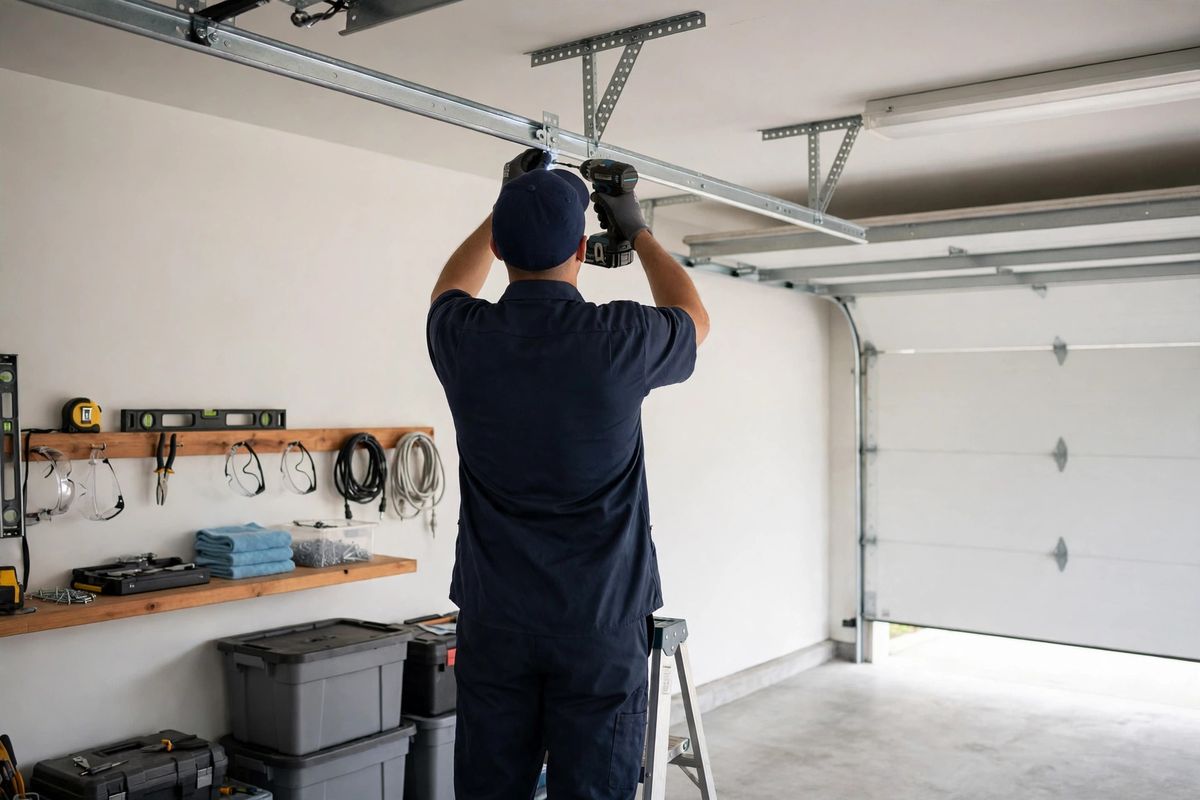
Near the floor on both sides of your garage door, there are two small devices that face each other across the opening. They are easy to overlook, but they are one of the most important safety features on a modern garage door. They are called photo-eye safety sensors, and they are the reason your door reverses instead of closing on a person, a pet, or a vehicle. This guide explains how they work, what goes wrong with them, and how to check them yourself.
How photo-eye sensors work
One sensor sends an invisible infrared beam across the doorway, and the other sensor receives it. As long as the beam is unbroken, the opener knows the path is clear and the door can close. If anything breaks the beam while the door is closing, the opener reverses the door immediately. The sensors are mounted a few inches above the floor, low enough to detect a child, a pet, or a small object in the doorway. They work together with a second safety feature: the opener's force setting, which reverses the door if it meets resistance. The sensors are required on modern openers, and an opener that does not have working sensors should not be used. If your opener is old enough that it has no sensors at all, a contractor can discuss whether a new opener is the right choice, which our garage door opener repair page covers.
Why a door reverses
Other sensor problems
Sensors can also fail because of damaged wiring, especially if the wires run along the floor where they can be damaged by a vehicle or by water. Sunlight shining directly into a sensor can sometimes overwhelm the infrared beam, which is why a door may reverse on a sunny afternoon but work fine at other times. A contractor can check the wiring, the sensor brackets, and the opener's settings, and can replace a failed sensor. Do not bypass or disconnect the sensors to make the door close, because that removes a safety feature that is there to protect people and pets. If the sensors are working but the door still reverses, the problem may be in the opener's force setting or in the door's tracks, and a garage door repair visit can find the cause.
Keeping sensors working
Check the sensors when you do a seasonal check of the door: wipe the lenses, confirm both indicator lights are steady, and make sure nothing is stored in front of them. Keep the area near the floor clear, and do not let boxes or tools lean against the sensor brackets. If you have children or pets, explain that the sensors are not a toy, and that the door should never be run while someone is standing in the doorway. Call (615) 845-8263 if the door keeps reversing after you have checked the sensors, or if a sensor is damaged. Homeowners in Murfreesboro, TN can call and describe the problem, and we will help connect them with an independent local contractor.
Key takeaways
- Sensors send an infrared beam across the doorway; breaking it reverses the door.
- Blocked, dirty, or misaligned sensors are the most common cause of reversing.
- Never bypass or disconnect the sensors.
- Check the indicator lights: steady means aligned, blinking means a problem.
Frequently asked questions
Common causes are a dead remote battery, a lost remote pairing, blocked or misaligned safety sensors, worn gears, or a failed circuit board. A contractor can test the opener, sensors, and door balance to find the cause.
No. If the opener hums or strains, turn it off and call for service assistance. Continuing to run it can burn out the motor.
If the opener is relatively new and only one part has failed, repair is usually sensible. If it is 10 to 15 years old and needs a major part, a contractor can discuss whether replacement is the better value.
Does your door have this problem?
If the problem in this guide sounds like your door, call (615) 845-8263 and describe it to a garage door specialist.
Related services
- Garage Door Opener Repair — Help with openers that hum, click, reverse, or stop responding to the remote, keypad, or wall control.
- Garage Door Repair — Help with doors that will not open, will not close, make noise, or have stopped working the way they should.
Related guides
- Garage Door Rollers and Tracks: Maintenance That Keeps Your Door Moving
- Seasonal Garage Door Maintenance Checklist for Murfreesboro Homeowners
See all guides on our blog, or browse our garage door services.
Need help with your garage door? Call today.
Call now to speak with a garage door specialist about your door, or get service assistance through our contact page.